Passionfruit facts

Passionfruit are originally from Brazil in South America and are also known as maracuyá or parcha (Spanish), grenadille or fruit de la passion (French), maracujá (Portuguese) and lilikoʻi (Hawaiian)

  • It is cultivated commercially in tropical and subtropical areas for its sweet, seedy fruit
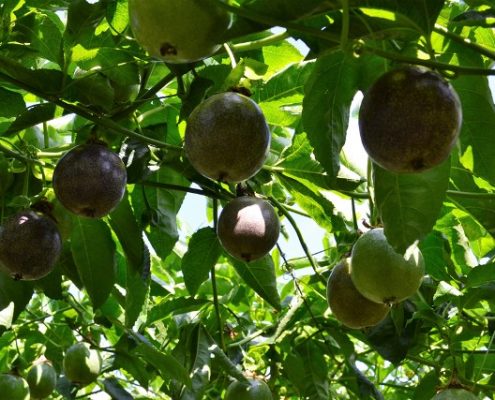
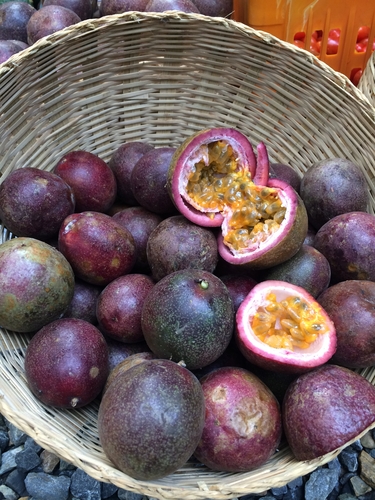
  • The passion fruit is a pepo, a type of berry, round to oval, either yellow or dark purple at maturity, with a soft to firm, juicy interior filled with numerous seeds
  • The fruit is both eaten and juiced; passion fruit juice is often added to other fruit juices to enhance aroma

https://en.wikipedia.org/wiki/Passiflora_edulis

Harvesting

  • Panama style varieties are normally hand-picked from the vine when they reach maturity and the right stage of ripeness
  • Growers will harvest regularly during the season to ensure fruit is picked at its optimum maturity stage
  • Purple style varieties ripen and fall from the vine to the ground when they are ready to eat
  • In peak season, growers will collect fruit from the ground under their vines twice a day to prevent the fruit from being burnt by the sun
  • Sun burnt fruit is unfit for fresh fruit sale
  • All varieties grown in Australia are sorted by size and graded according to their external skin quality and their eating quality

Health benefits of passionfruit

  • Alkaloids – passionfruit leaves of some varieties are reported as having somniferous properties that can promote sleep, calm anxiety and address hyperactivity in children
  • Potassium – passionfruit contains the same amount of potassium found in bananas at about 348mg per 100g of fruit pulp
  • Fibre – passionfruit are a good source of fibre, with 100g providing 35% of an adults recommended dietary intake.  Fibre is important in the diet for helping to remove cholesterol from the body.
  • Vitamin C – passionfruit are a source of Vitamin C providing about 30mg per 100g of fruit pulp. Vitamin C is a powerful, water-soluble antioxidant
  • Vitamin A – passionfruit are a source of Vitamin A providing about 1274IU per 100g of fruit pulp
  • And best of all, passionfruit are low in energy – only 55 kilojoules per serve

How to select and store

  • Contrary to popular belief, you don’t have to wait for a passionfruit to wrinkle before it is ready to eat
  • The fruit wrinkles because the moisture is being lost to the air
  • As it wrinkles, the fruit flavour will deteriorate and even start to have a fermented taste
  • Look for fruit that is plump and heavy for its size
  • Skin blemish doesn’t generally have any impact on the flavour of the fruit inside so don’t be put off by small scratches, blotches or marks
  • Its always a good idea to wash any fresh fruit and vegetables before eating them, particularly if the product is eaten raw
  • Once you take your passionfruit home, in cooler parts of Australia keep the passionfruit in the fruit bowl.  In summer and in the warmer parts of the country store your passionfruit in the fridge
  • If you put the passionfruit inside a plastic bag and store them in the vegetable crisper area of your fridge, they can last 2-3 weeks
  • Passionfruit pulp freezes well so when they are plentiful in summer and autumn, why not stock up and fill your freezer with pulp ready to use in all your favourite desserts and cakes – using an old ice cube tray is a great way to create handy portions of beautiful passionfruit to use later